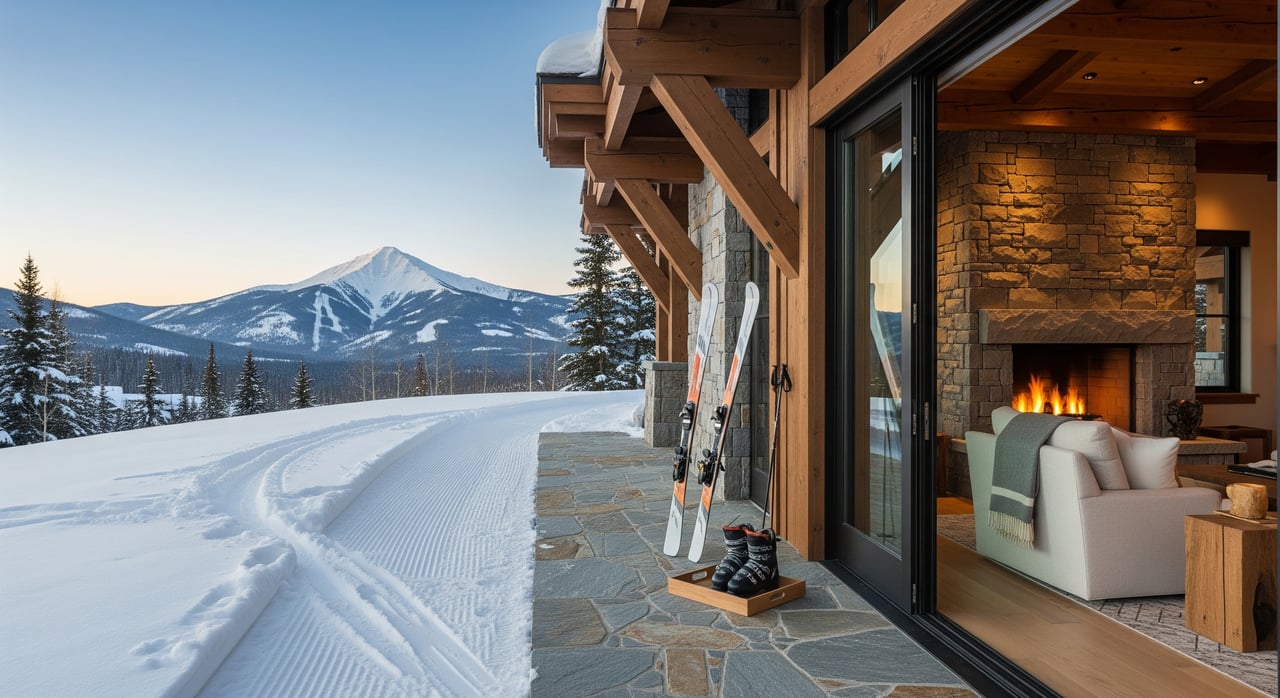
Dreaming of clicking into your skis at the back door and gliding to first chair? In Whitefish, that experience is possible, but the term ski-in/ski-out covers a range of realities. If you’re shopping from out of state, it can be tough to tell what you’ll actually get on a bluebird morning or a low-snow week. This guide breaks down what ski-in/ski-out really means around Whitefish Mountain Resort, how access works, what to ask HOAs, and the practical costs to plan for. Let’s dive in.
What ski-in/ski-out really means
Ski-in/ski-out is a marketing term, not a uniform legal designation. You’ll see a spectrum of access types in listings.
- True ski-in/ski-out: Step from your garage, door, or patio directly onto groomed skiable terrain without walking or driving.
- Ski-to-door or ski-adjacent: You can ski close, then walk a short distance through a pedestrian area to your building.
- Ski access with crossings: You might cross a road, driveway, or ungroomed area. It is still called ski access but is less convenient.
- Resort-dependent access: Some homes sit inside resort boundaries and rely on lifts, passes, and resort policies. Others are outside and depend on private easements.
Why it matters: The practicality of ski access changes with snowfall, grooming, and resort operations. A property that skis perfectly in peak season may not ski the same in early or late season. If a route crosses public or private property, you’ll want to verify easements and safety.
How access works at Whitefish Mountain Resort
Whitefish Mountain Resort is the anchor for ski access in Whitefish. Understanding the layout and rules helps you set clear expectations.
Inside resort boundaries vs. adjacent
Properties within resort boundaries are the most likely to offer uninterrupted ski access. Homes outside the resort typically rely on recorded easements, local paths, or municipal rights of way to connect to the nearest run. Always confirm where the property sits relative to resort land.
Lifts, trail maps, and real-world routes
Trail maps are essential. Verify whether a groomed run terminates near the property and how far you are from lift boarding points. Some homes require a short ski to a specific lift. Others require a walk in ski boots or a brief drive to a base area, especially on lower-snow days.
Road crossings and safety
Ski-adjacent routes often cross resort roads or public streets. These roads can be plowed and active. If your family plans to ski back each afternoon, think through safety, signage, and the convenience of crossing with kids or guests.
Seasonality and snowfall
Whitefish’s ski season varies year to year. Temperature, grooming, and snowfall affect whether you can practically ski to or from your door. Clarify early, mid, and late-season expectations with the seller and review any notes on seasonal closures.
HOAs, shuttles, and winter services
HOAs are central to daily convenience in mountain communities. The details matter.
- Snow removal: Who is responsible for driveways, roofs, sidewalks, and parking pads? Frequency and trigger depths differ by contract.
- Road maintenance: Private roads often need winter grading and ice control. Costs may be covered by dues or special assessments.
- Shuttle services: Some HOAs run owner and guest shuttles, others contract private operators, and some rely on public or resort shuttles. Verify hours, frequency, and reservation rules.
- Parking rules: Many base-area developments restrict on-street and overnight parking in winter. Ask about tow policies and guest limits.
- Short-term rentals: If income is part of your plan, check CC&Rs, local ordinances, and any resort policies for caps or restrictions.
- Storage and amenities: Heated ski lockers, boot rooms, and secure storage can be a big win for out-of-state owners.
Ask to review CC&Rs, bylaws, recent meeting minutes, current budgets, reserve studies, master insurance, and vendor contracts for snow removal and shuttle service.
Costs to expect beyond the purchase price
Mountain ownership carries unique costs. Build a realistic budget so there are no surprises.
- HOA dues: Often higher to cover winter services, shuttle operations, and common area heating.
- Special assessments: Possible for road work, easement maintenance, or infrastructure upgrades.
- Insurance: Premiums can reflect higher replacement costs and winter risk profiles.
- Resort-related fees: Depending on location, you may encounter policies for guest badges, parking, or lift access for adjacent owners.
Neighborhood types near the resort
Not every ski-adjacent neighborhood offers the same experience. Use this framework as you compare options.
- On-resort base area: Village and base-lodge buildings are the most likely to be true ski-in/ski-out with immediate access to services. Expect higher density and clearer HOA rules.
- On-mountain private developments: Inside or bordering the resort. Often provide private access, sometimes with gated entries and private roads. Verify easements and permissions.
- Ski-adjacent outside resort land: Usually quieter and may offer larger lots. Often require a short walk or shuttle to reach the lifts.
- Town of Whitefish with shuttle: In-town homes rely on scheduled shuttles or a quick drive to the base. These shine in summer and shoulder seasons.
How to verify ski access like a local
Take a practical, step-by-step approach so your expectations match reality.
- Study trail and lift maps, then overlay the property location to understand the exact route.
- Confirm whether you are inside resort boundaries or adjacent, and identify any recorded easements or rights of way.
- Request a seller statement or map detailing the ski-in and ski-out paths and when each is usable.
- Talk to the HOA about snow removal, shuttle schedules, parking rules, and guest capacity.
- Visit in winter if possible. Walk the route in ski boots, cross any streets, and time the return from the lift to the door.
- Ask about early and late-season conditions. Clarify which runs or cut-throughs rely on higher snow depths.
Buyer due-diligence checklist
Review documents and do on-site checks before you decide.
- Preliminary title report confirming recorded ski easements, access easements, and covenants.
- CC&Rs, bylaws, HOA budget, reserve study, recent meeting minutes, and vendor contracts.
- Property survey and plot plan showing boundaries relative to trails and roads.
- Current resort trail map aligned with the property’s location.
- Seller disclosure on winter access, including any blocked periods or detours.
- Insurance history if available, with attention to winter-related claims.
- Winter site visit to test ski and vehicle access; attend an HOA meeting if timing allows.
- Local ordinance review for short-term rentals, parking rules, and public safety.
Next steps for out-of-state buyers
- Request the full HOA packet and title documents early, especially if you are comparing several buildings or subdivisions.
- Schedule a winter tour with a local agent who knows ski properties. Ask for a guided run of the exact ski-in and ski-out routes and any shuttle pickup points.
- Verify arrival-day access. Ask about plowing priority, parking, and key storage if you plan to arrive late.
- If you care about rental income, confirm occupancy limits with both the HOA and local authorities, then ask area property managers for typical seasonal occupancy trends.
Ready to evaluate specific addresses near Whitefish Mountain Resort with a clear plan? Let’s tailor a shortlist, line up the right documents, and walk the routes together so you can buy with confidence. Talk to Unknown Company to learn more. Let’s connect. Schedule a private consultation.
FAQs
What does ski-in/ski-out mean in Whitefish listings?
- It typically describes direct or near-direct access from a home to groomed skiable terrain, but the exact convenience varies by property, season, and resort operations.
How can I confirm a Whitefish home is truly ski-in/ski-out?
- Compare the property location with current trail and lift maps, verify recorded easements, request a seller access map, and test the route during a winter visit.
Do I need a lift pass to use ski access from a home?
- If access traverses resort land, you should expect to follow resort policies, which can include lift tickets or passes for terrain use.
Who handles snow removal at on-mountain properties?
- It varies. Some HOAs contract snow removal for roads and driveways, while others leave portions to owners. Check HOA documents and vendor contracts.
Are short-term rentals allowed near Whitefish Mountain Resort?
- Rules differ by HOA and local ordinance. Review CC&Rs and local regulations, and confirm any resort-specific policies that apply to your building or subdivision.
What extra costs come with ski-in/ski-out ownership?
- Budget for higher HOA dues, possible special assessments, mountain-area insurance premiums, and any resort-related parking or access fees.